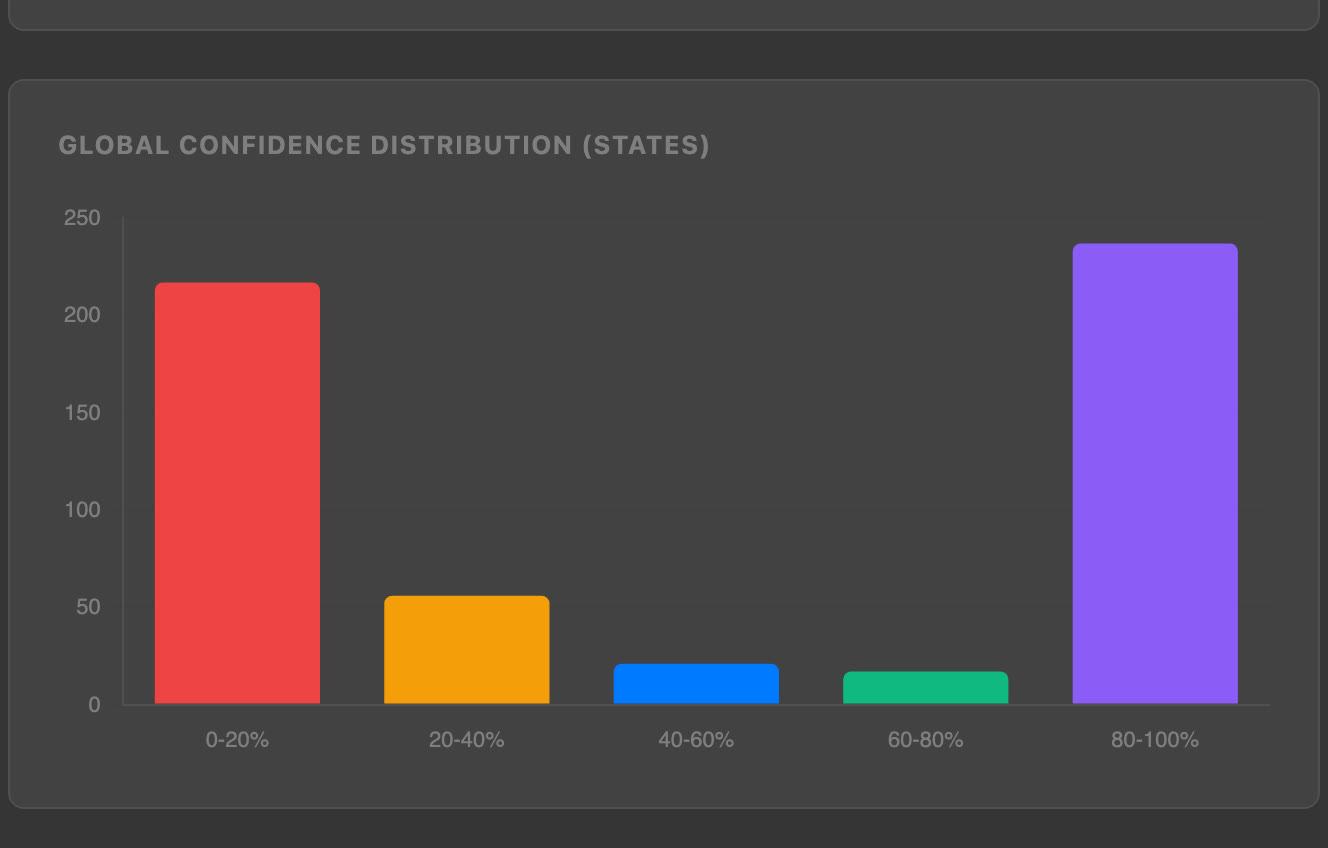
01 — Reinforcement learning
Learns from outcomes
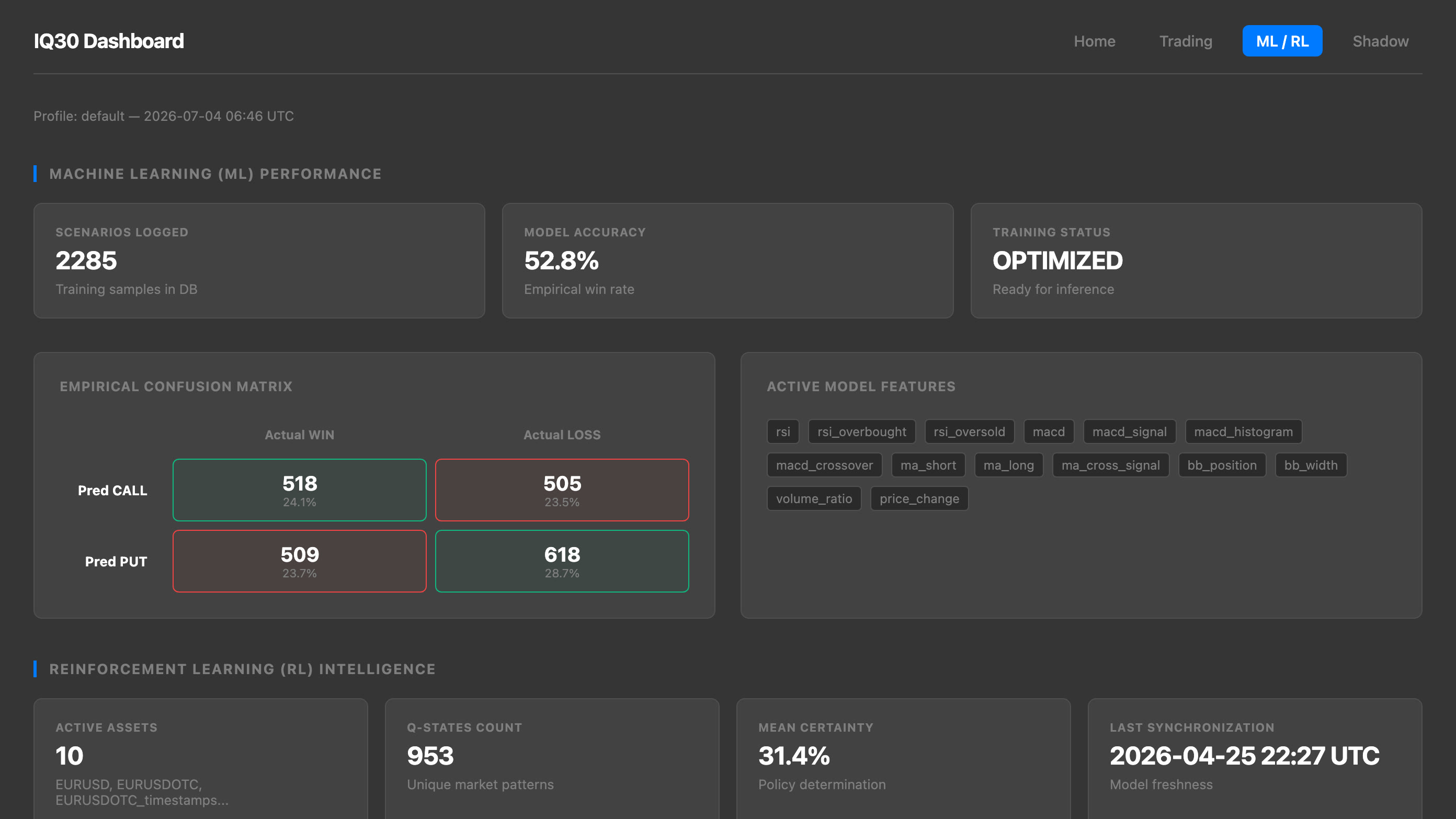
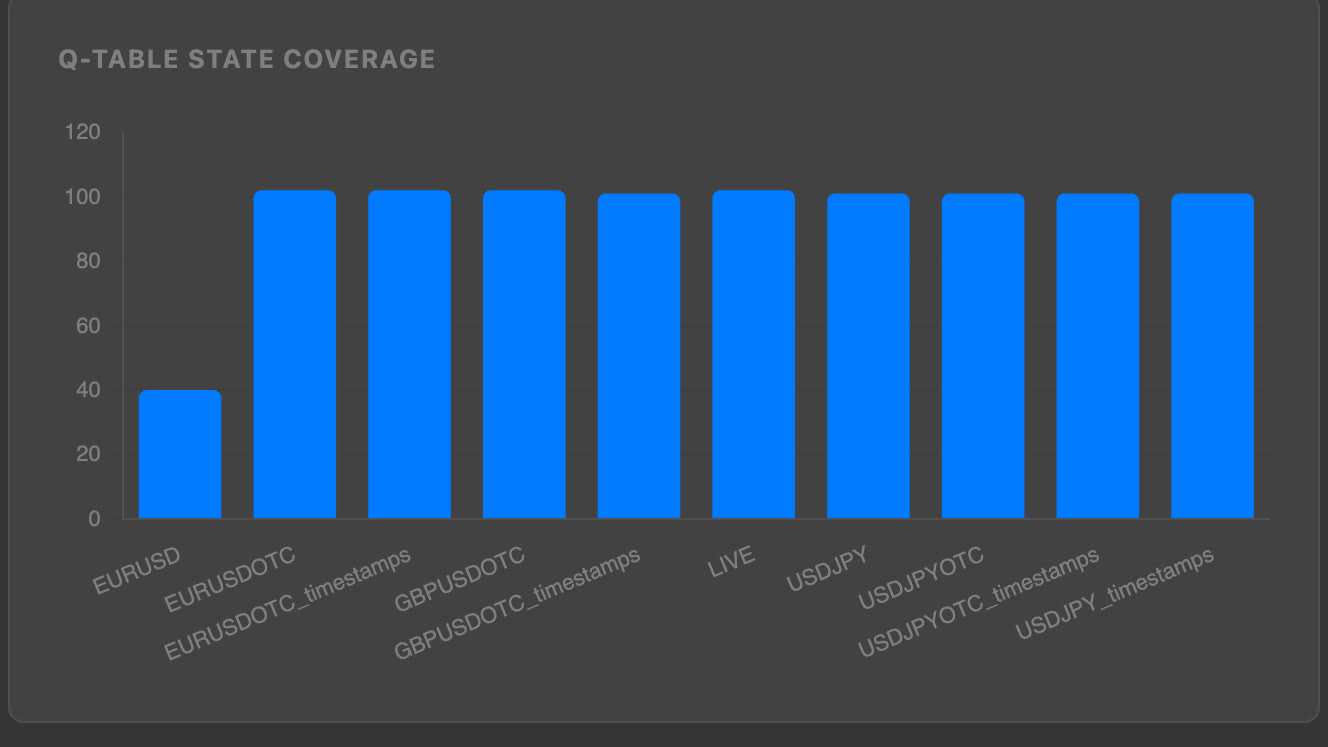
- Tabular Q-Learning v3.1 with per-asset Q-tables.
- A TensorFlow Deep Q-Network trained on 370,000+ USD/JPY candles.
- Reward shaped on real trade outcomes, not just price prediction.
IQ30 is a desktop app that trades binary options and Forex/CFD on IQ Option on its own — an AI decision layer (reinforcement learning, classical ML and local LLMs that read the chart), with risk and money management, a full backtesting research suite and a complete GUI. I built it solo by directing AI end-to-end: the product decisions, the agent and prompt design, and the testing discipline that keeps it honest are mine.
IQ Option has no official options API, so I designed the system to degrade gracefully across three interchangeable market-access modes:
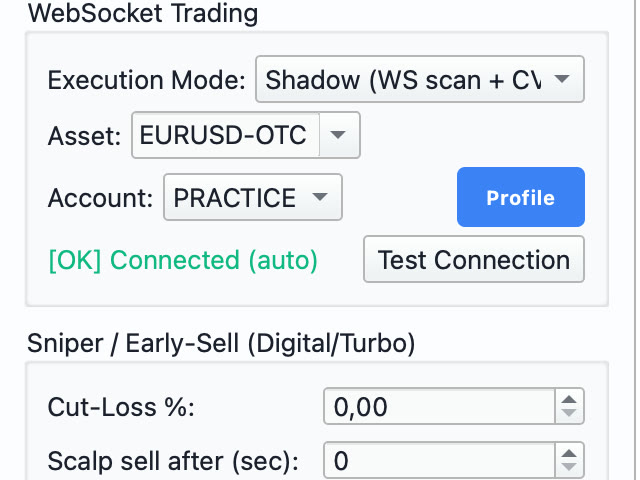
Unofficial low-latency socket for fast, programmatic order placement when the channel is available.
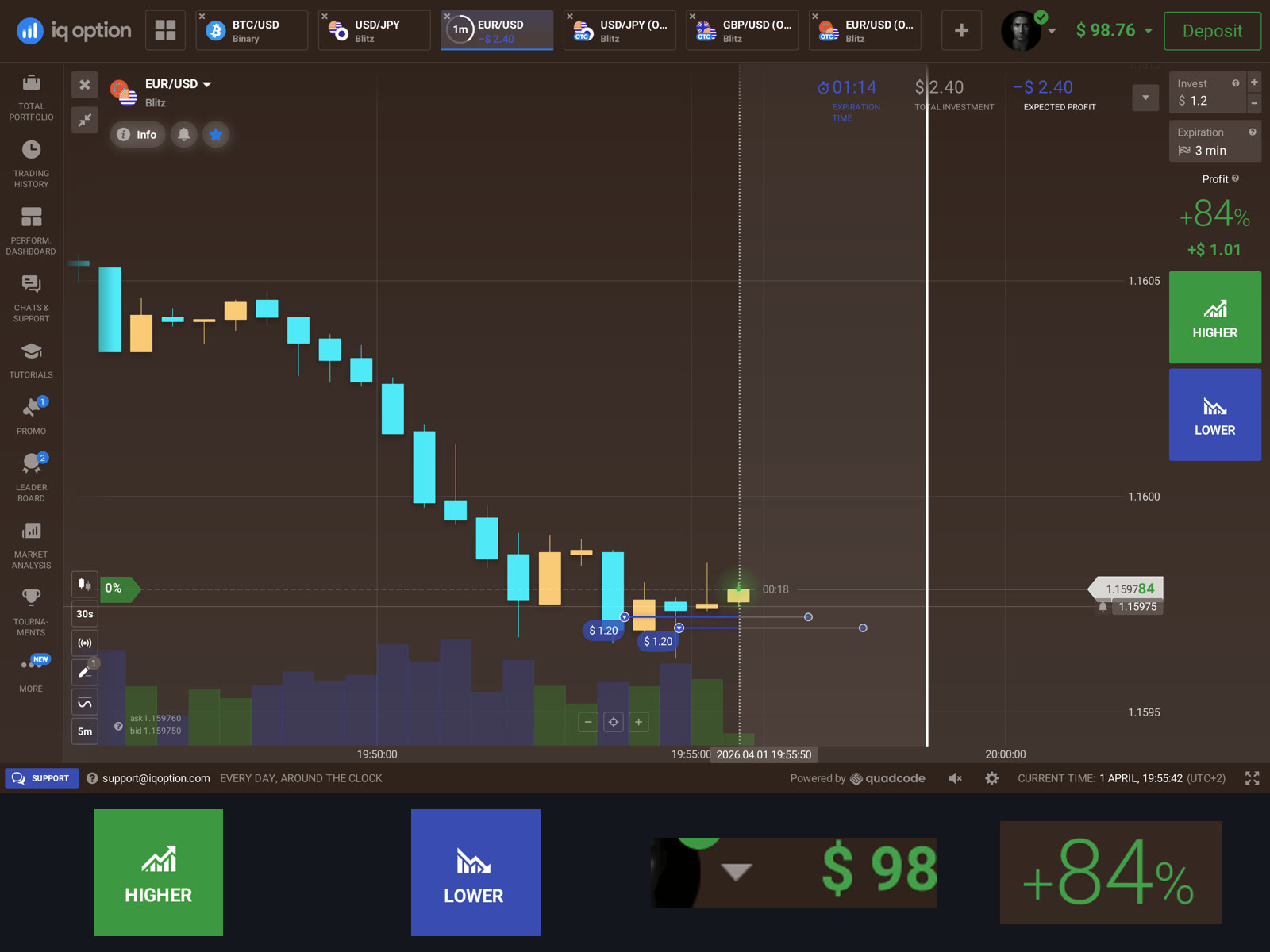
OpenCV + Tesseract OCR read balance, payout and trades off the screen; GUI automation clicks the buttons. No API required.
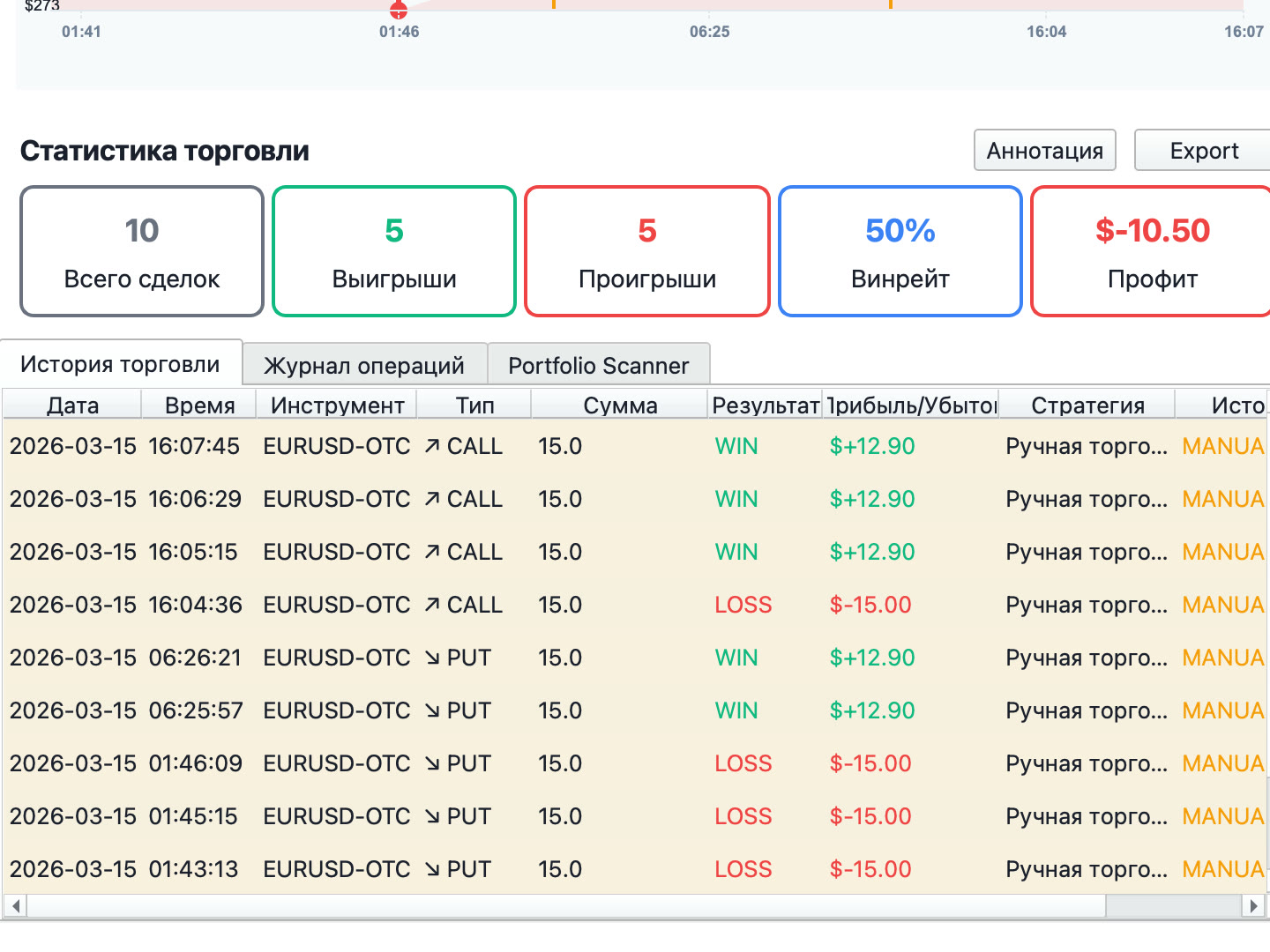
The bot watches manual trading and learns from it without placing orders — a safe path to collect ground-truth.
My job wasn't to type the code — it was to make a real money-handling system actually work. I set the architecture and product direction, designed the decision agents and their prompts, and ran the testing: against live data, real and demo-account trades, and real notifications, not just on paper.
Fully autonomous — it picks direction itself, no manual “press CALL”. An ensemble of independent subsystems votes on every candle; a tie means skip the trade. Three families of intelligence run side by side:
A dedicated engine computes win rate, edge, expected value, Kelly fraction, Sharpe, max drawdown, profit factor and consecutive win/loss streaks per asset and payout. Strategies run through a four-phase funnel — and every batch is ranked by the gap between training and validation, so overfit winners are caught, not celebrated.
Across batches, 2,370+ strategy/parameter combinations were tested. The goal was never a hero number — it was to find configurations that survive out-of-sample, and to write down the ones that didn’t.
| Validated configuration | Asset | Timeframe | Win rate | Edge | Sharpe | Profit factor |
|---|---|---|---|---|---|---|
| RSI — balanced | USD/JPY | 1H | 69.9% | +16.1% | 3.2 | 2.0 |
| RSI — aggressive | USD/JPY | 1H | 70.1% | +16.4% | — | — |
| RSI + Trend | USD/JPY | 1H | 62.2% | +8.4% | — | 1.41 |
| RSI + Trend | EUR/USD | 1H · 2023 | 66.0% | +12.0% | — | — |
| Volatility Breakout | EUR/USD | Europe session | 60.5% | +6.5% | — | — |
Out-of-sample backtest configurations, drawn from saved presets and the four-phase optimisation report — research artefacts, not a promise of live returns. Dashes mark metrics not stored for that preset.
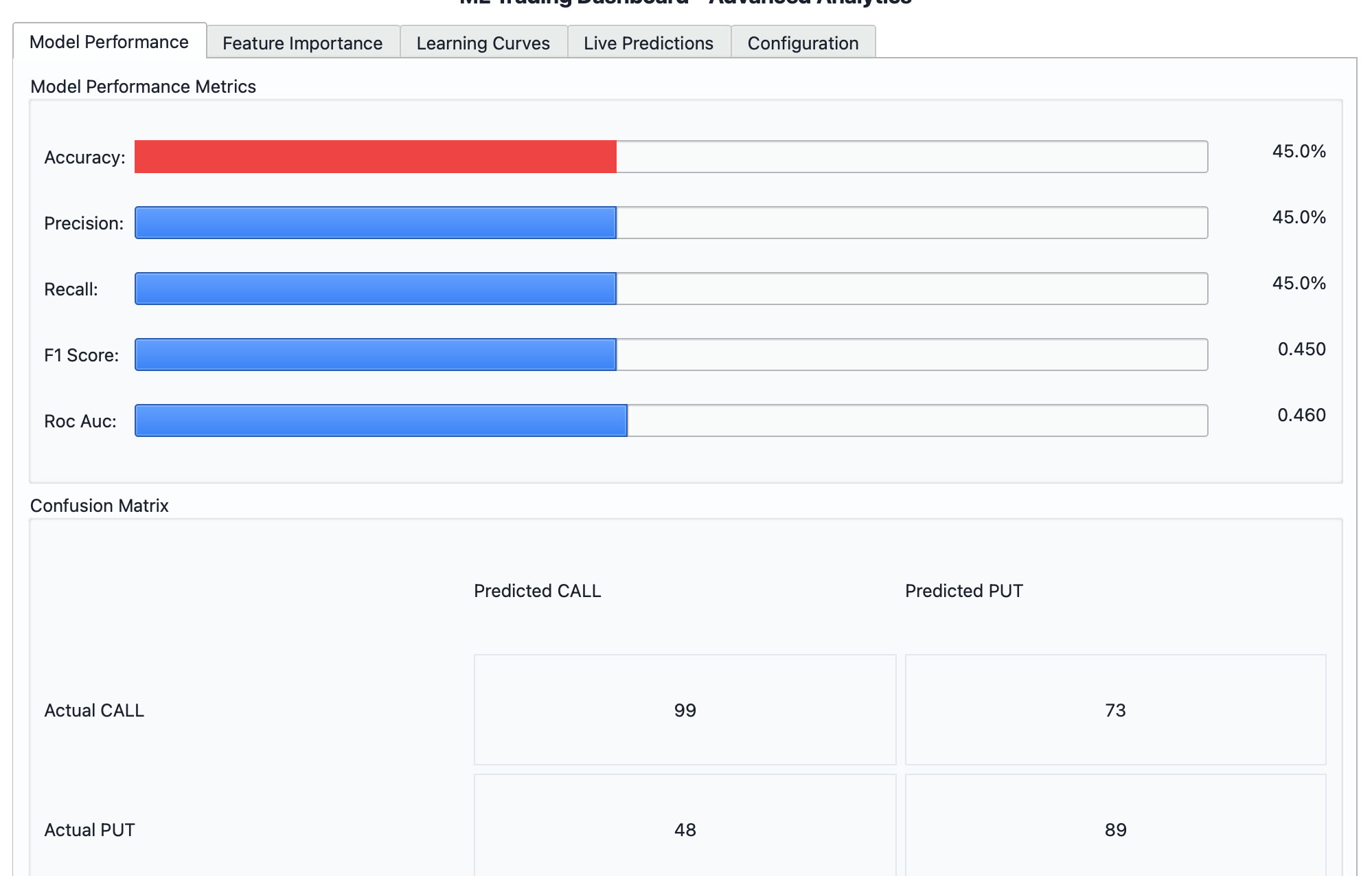
Order-Block / SMC strategies backtested mostly unprofitable and were never shipped. An early Random-Forest model was caught overfitting on a biased 2025 snapshot and retrained from a clean split. And the edge on RSI+Trend EUR/USD decays from +12% in 2023 toward break-even by 2025 — documented in the year-stability phase, not hidden.
That honesty is the point: a system that handles real money is only as trustworthy as the failures it’s willing to write down.
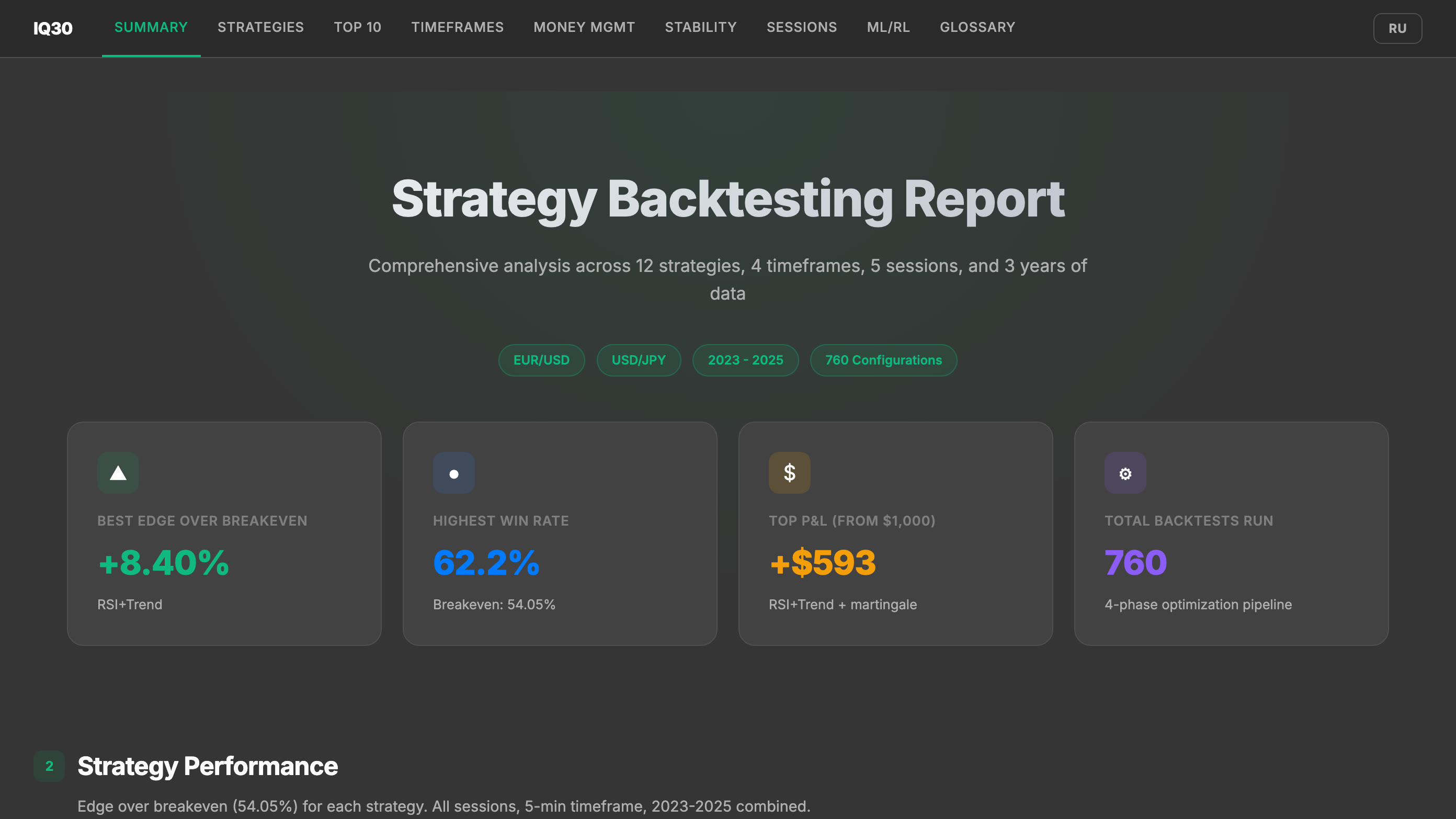
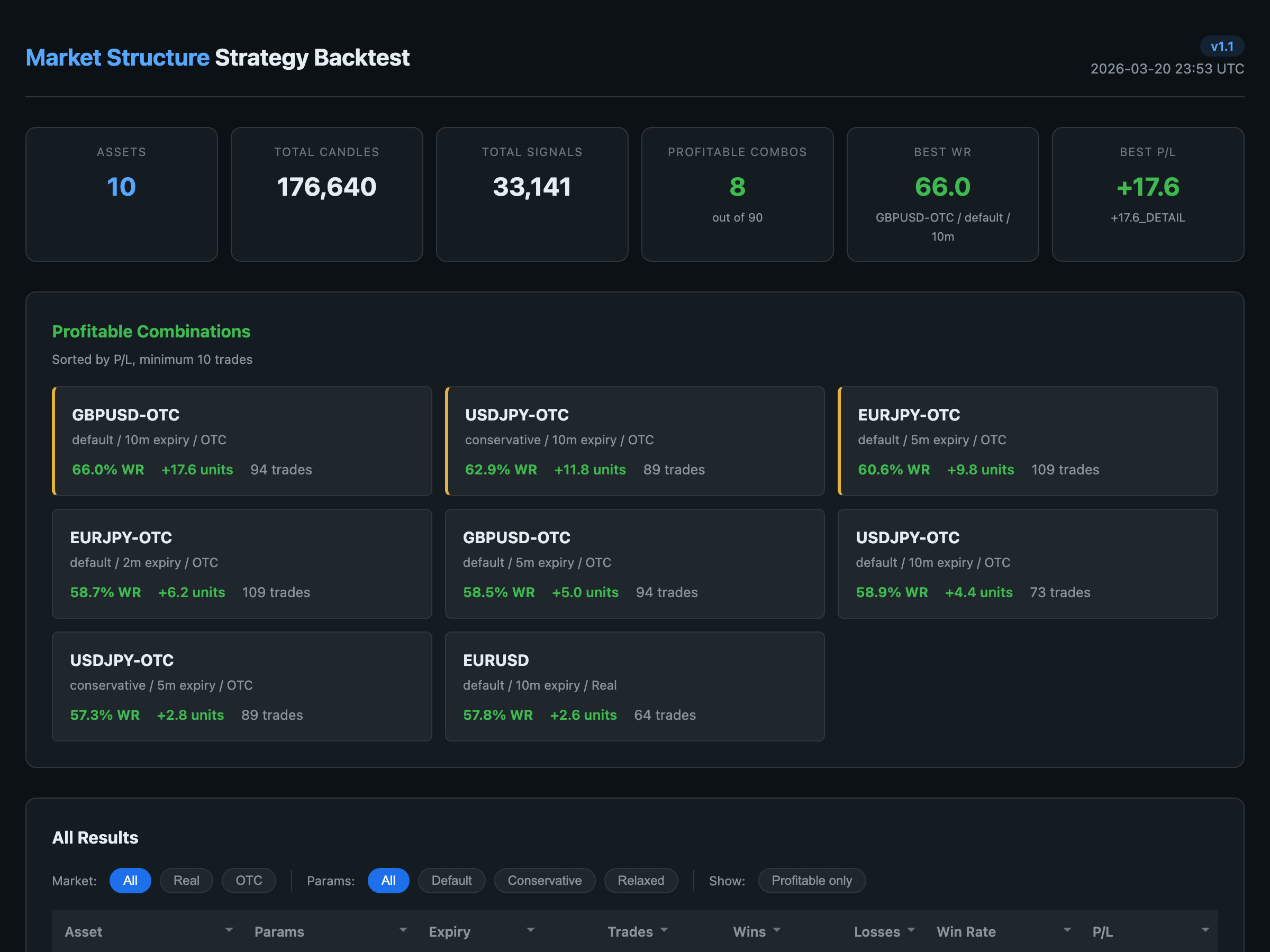
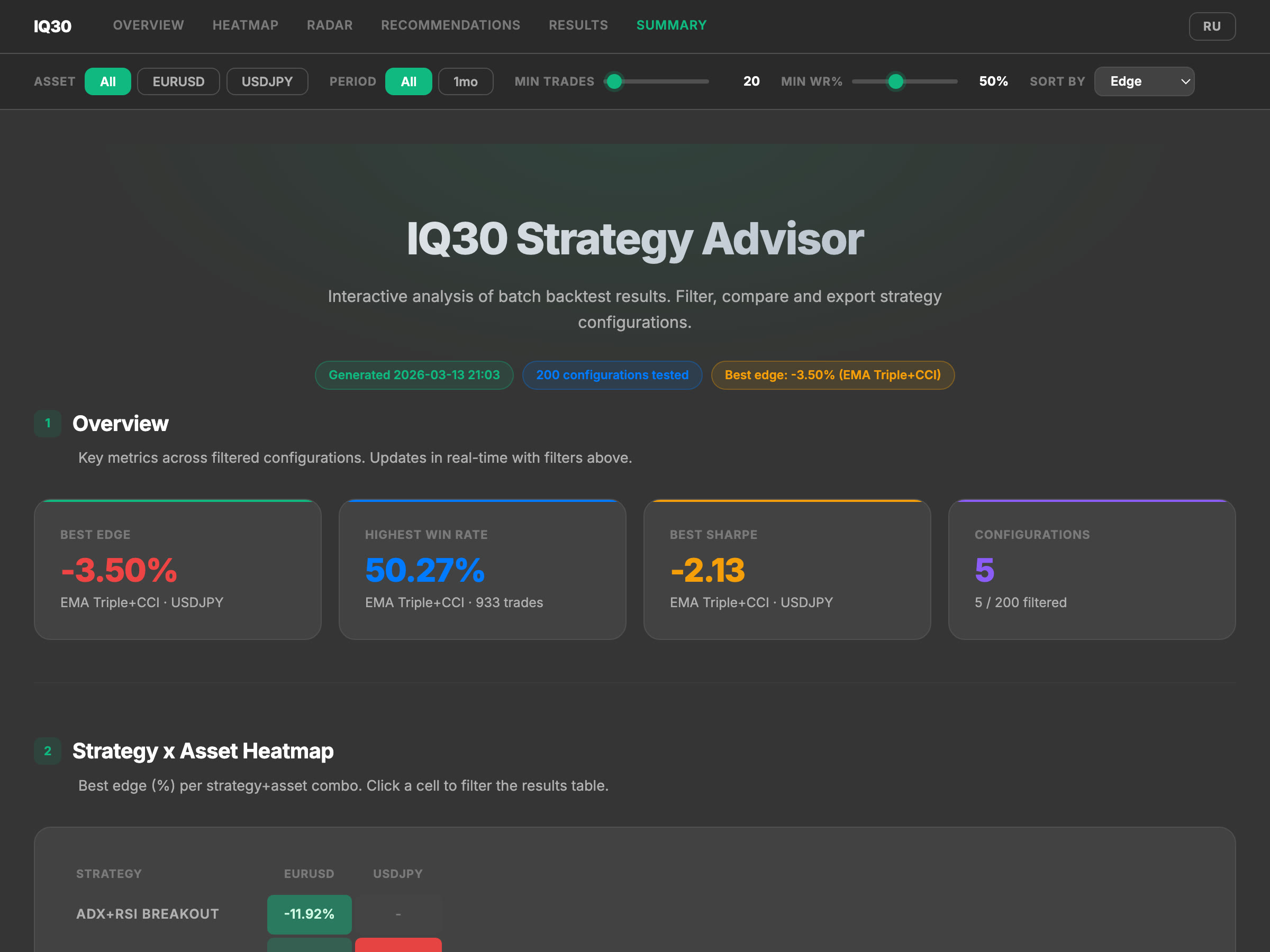
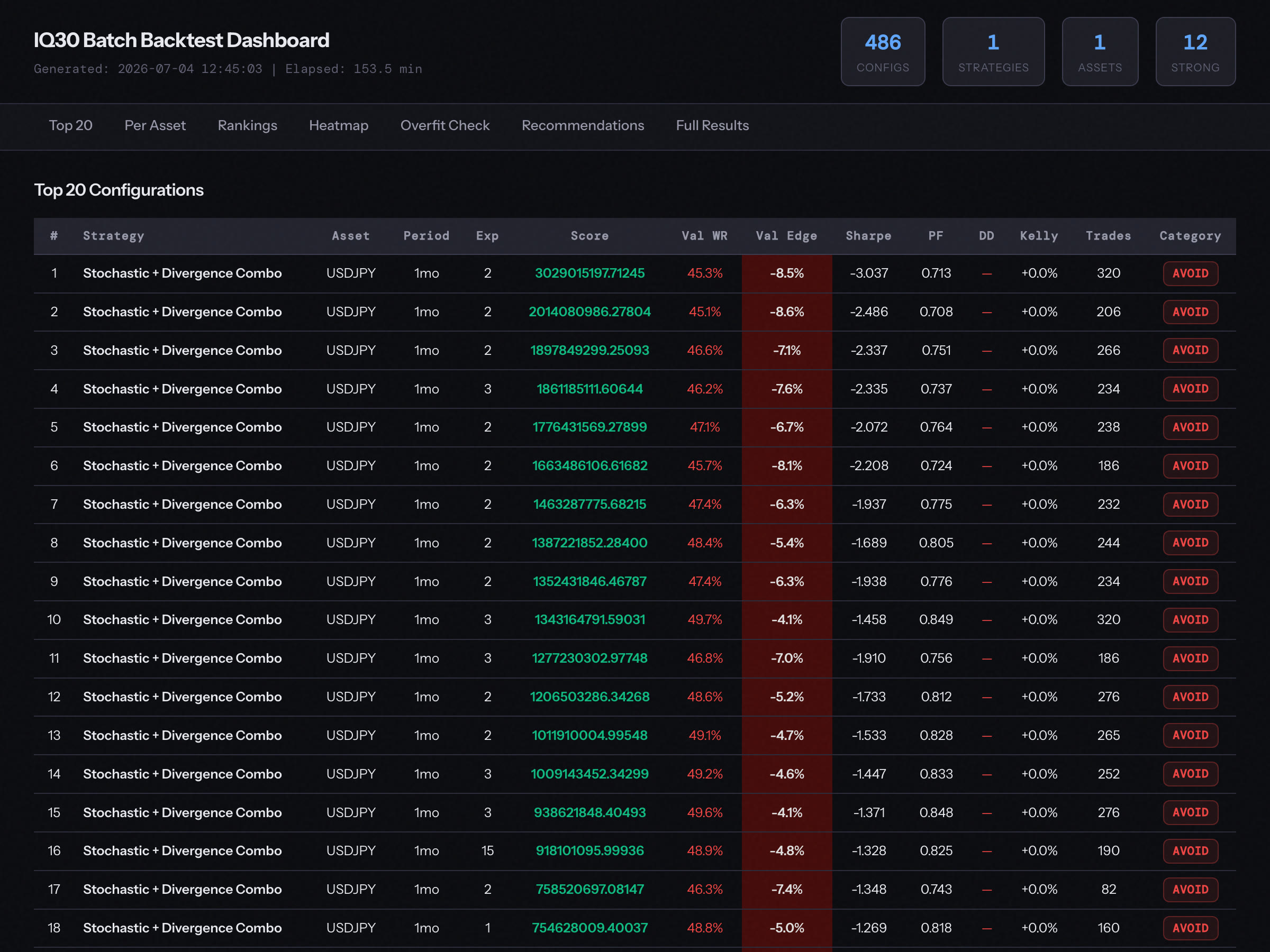
A dashboard generator reads the trade database and the RL state and emits balance curves, P&L by day, and win rate broken down by strategy, by asset and by hour — the same hour-by-hour data that feeds a filter which skips historically losing hours.
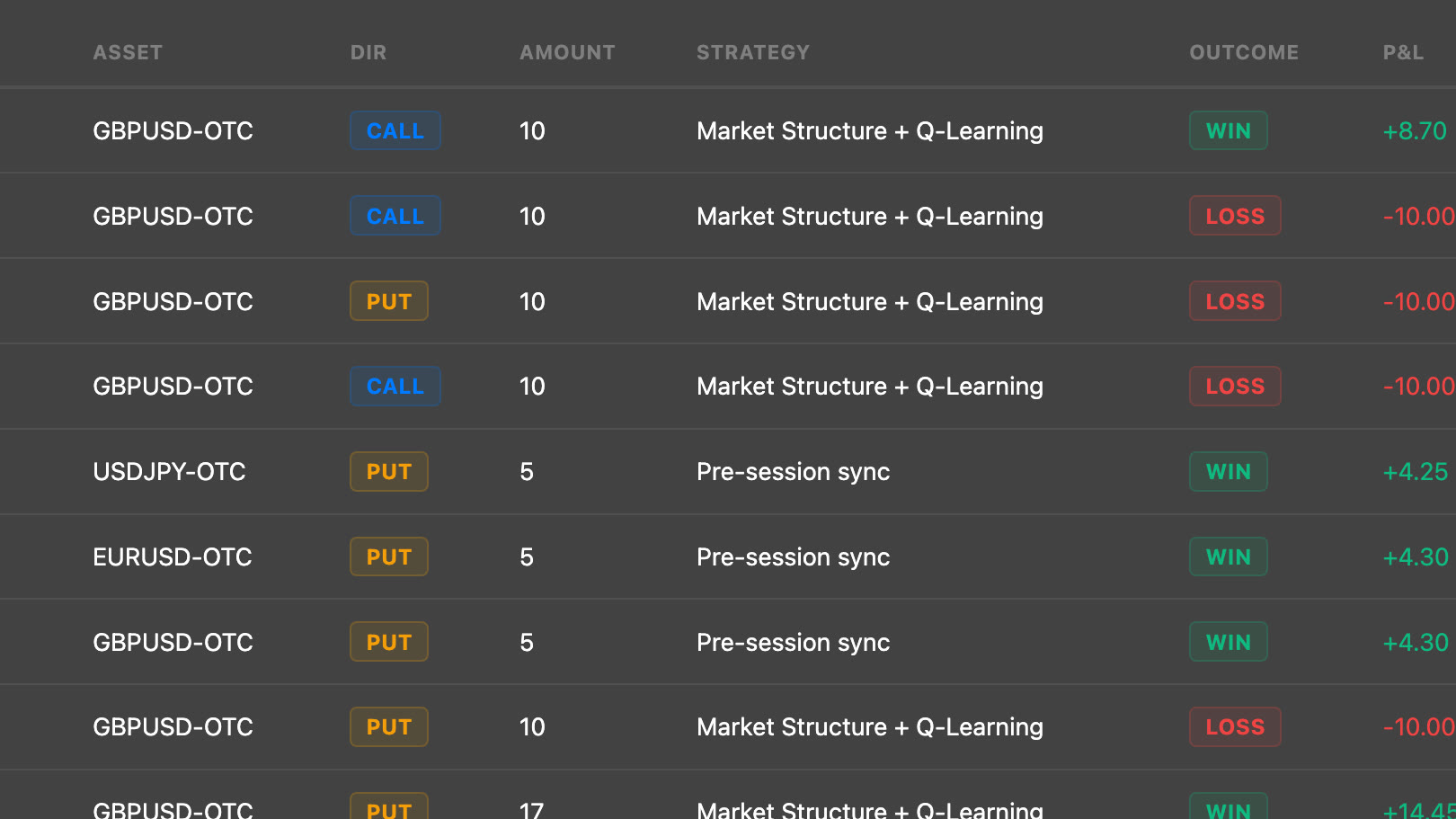
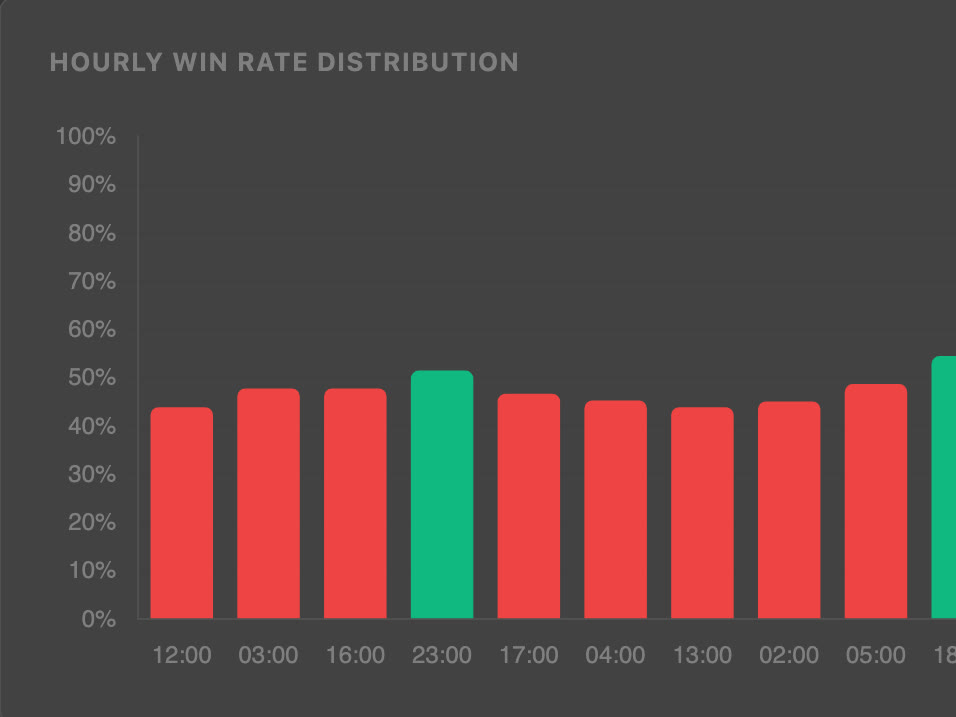
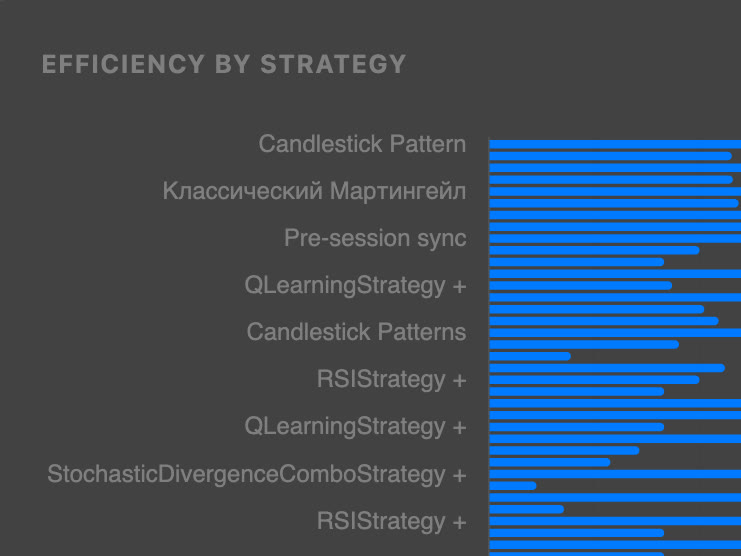
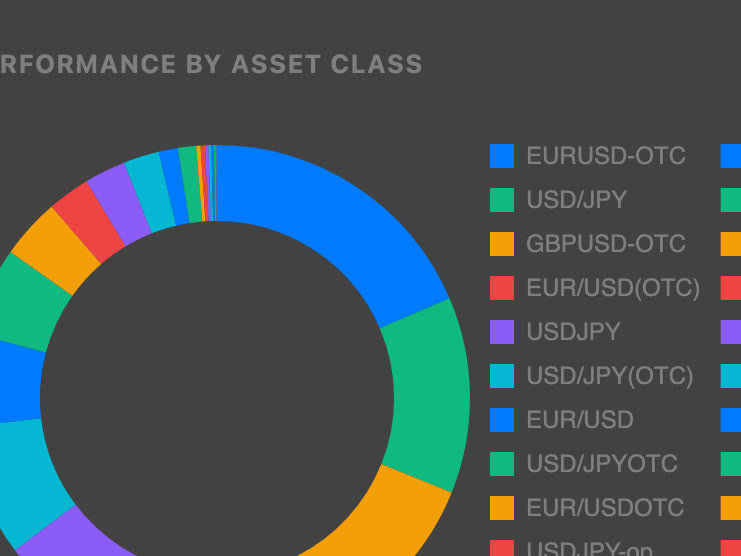
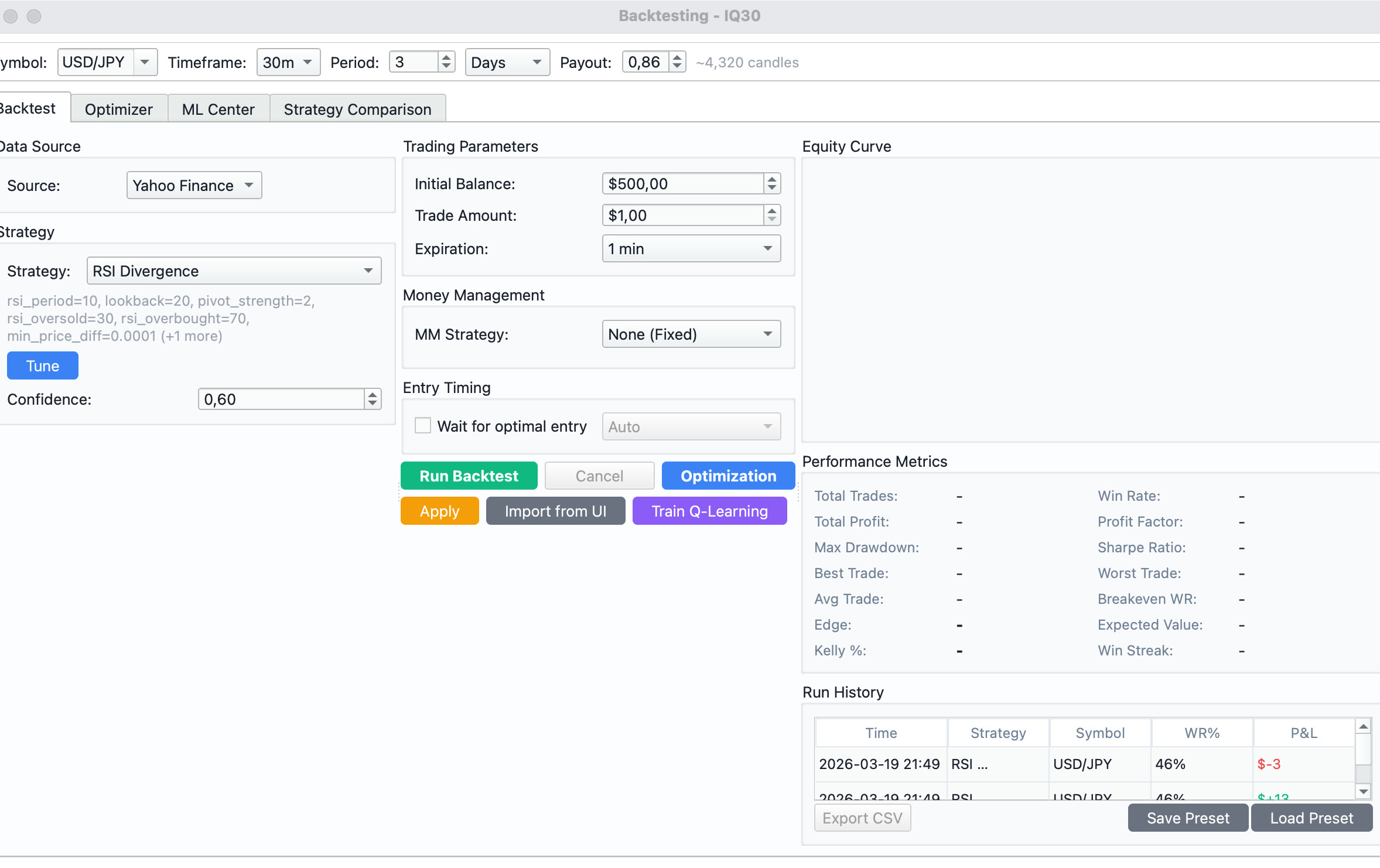
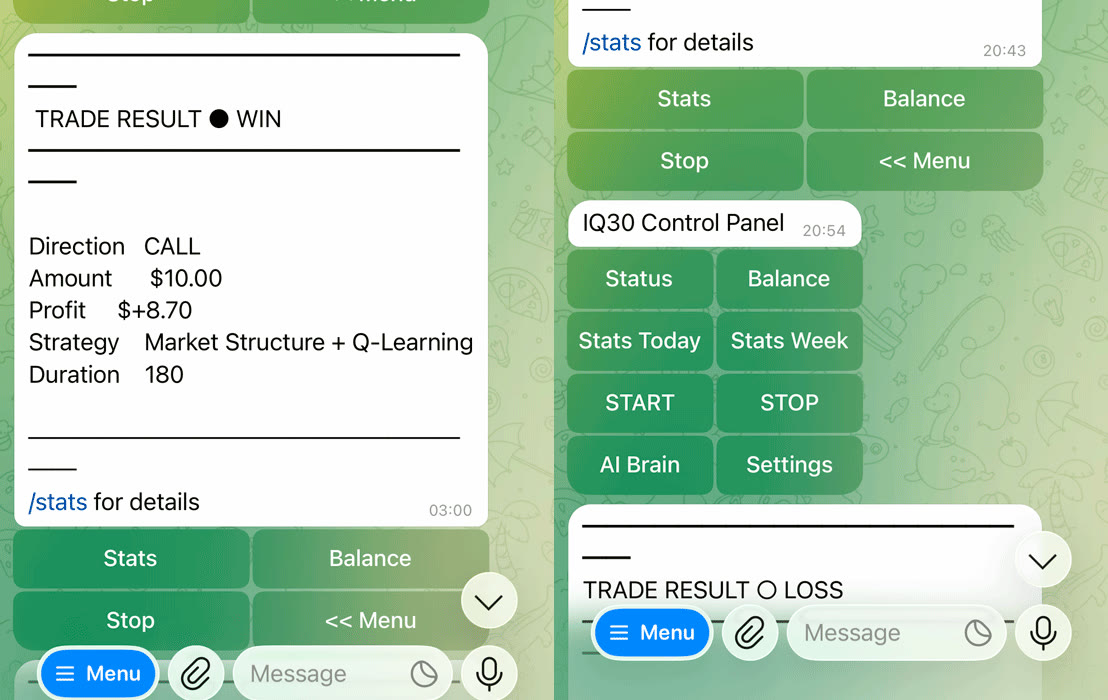
The code was AI-generated under my direction — the decisions weren’t. What actually shipped this system: choosing three interchangeable market-access modes when no official API existed; writing NO_FALLBACKS into the core — halt rather than act on unverified money data; catching an overfit model in validation and retraining it from a clean split; and publishing the edge decay instead of hiding it. Six months from idea to a running system — the architecture, the agent design and the QA discipline are the work.
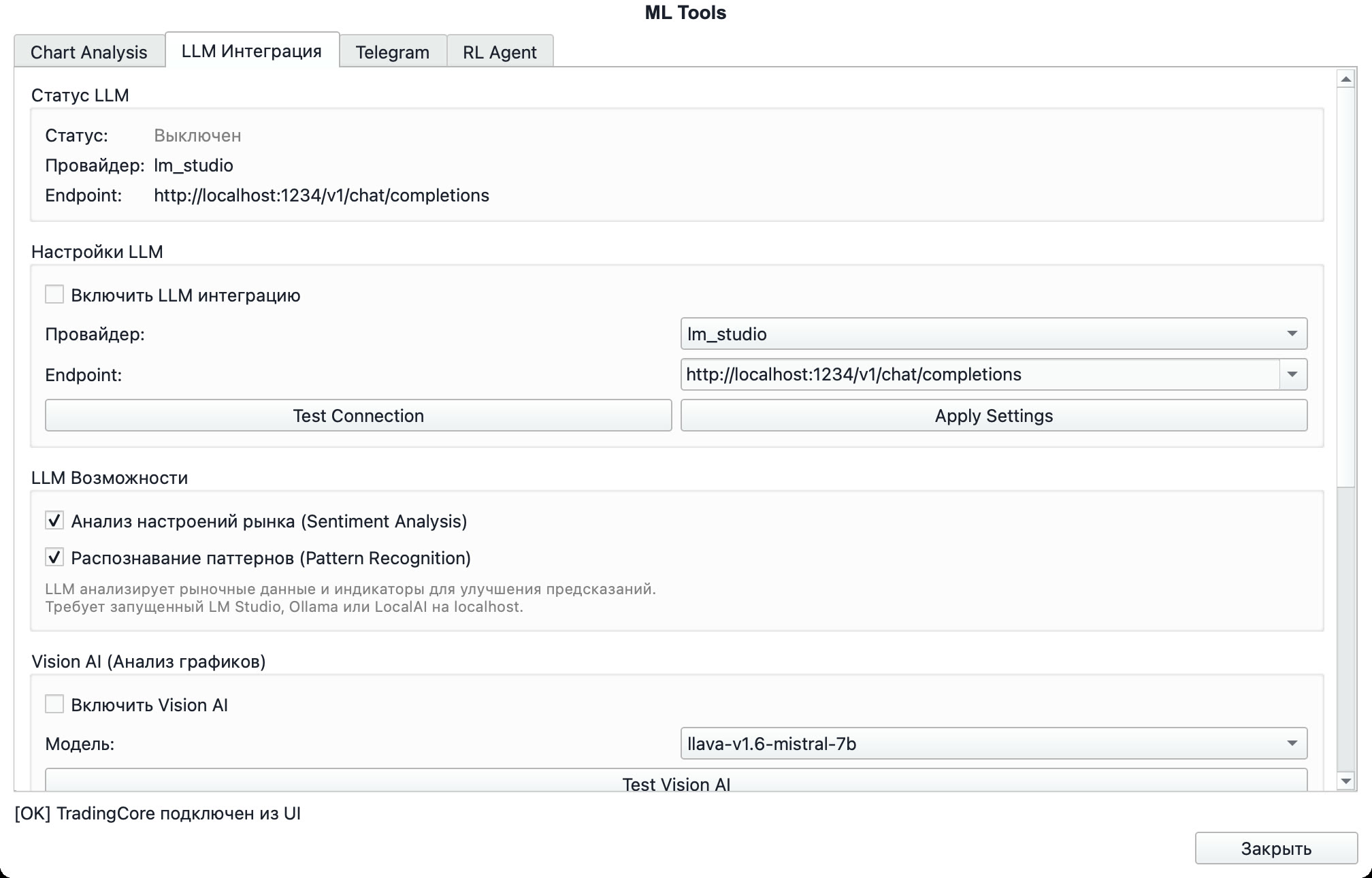
Status, honestly: the trading core (WebSocket + computer-vision), Q-Learning, money management, risk filters, backtesting and GUI all work. The five advanced TURBO strategies and Forex auto-trading are code-complete and in testing; the local-LLM layer (Gemma + Qwen) was recently integrated and is being validated on live charts. A real, running system — shown with its methodology and its failures, deliberately without performance promises.